


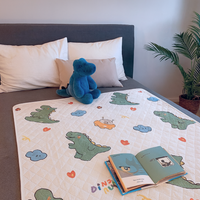
Waterproof Bed Mat
Keeps mattresses dry and stain-free.
Make potty training easier and more confident.


Make potty training easier and more confident.

Most buyers add these items to their order.
Keeps mattresses dry and stain-free.
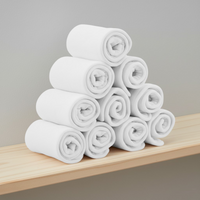
Extra absorbency for overnight and long trips.
Potty training / Skin
Every cream works. None of them last. After age two, the variable that actually moves the rash is the same one that decides when she's out of diapers — and it isn't in the baby aisle.

If you came here from a post about the rash that clears up and comes back, this is the part that wouldn't fit in the post.
You already know the pattern better than you'd like to.
The skin goes red.
You put the cream on.
Two or three days later it looks fine, and you feel like you've finally got on top of it.
Five days after that, you open a diaper and it's back.
So you assume you picked the wrong cream. Or you're not changing her often enough. Or she's got sensitive skin and this is just going to be your life for another year.
None of those are it.
The cream worked. It always worked. What happened is that the thing causing it went straight back on afterwards, and stayed on for another twelve hours.
The loop you're stuck in
↺ Five days later, you're back at step 1
Nothing in this loop is a mistake. Every single step is what you were told to do.
Change her more often. Air time after the bath. Barrier cream at every change. Fragrance-free wipes. Pat, never rub.
All of it is correct. All of it was written with a baby in mind — a baby who has no other option, because a baby can't tell you anything and can't hold anything.
Nobody updates that advice for a two-and-a-half-year-old. So you keep applying baby advice to a child who has outgrown the situation it was written for, and you assume the reason it isn't holding is you.
It isn't you.
I'm not going to tell you diapers are bad. I used them for two and a half years and I'd use them again tomorrow with a newborn. They're the reason you can drive four hours, sleep through a night, or get around a supermarket with your dignity intact.
But it's worth being honest about the design brief.
A disposable diaper exists to hold urine against skin for hours without leaking. That's the product. Modern ones are extraordinarily good at it.
Warm, wet and sealed against skin, for hours a day, for years, is more or less the textbook description of how diaper dermatitis happens.
Which means the cream isn't failing. It's being asked to out-run something that goes back on ten minutes later and stays on all day.
Here's the part that reframed the whole thing for me, and you've almost certainly noticed it yourself without doing anything with it.
She's fine on the days she runs around with nothing on.
Every mother I've spoken to about this has seen it. And nearly all of us filed it under interesting but useless, because you can't keep a toddler naked and get anything done.
But that observation is the answer. It isn't the brand of diaper. It isn't which cream. It's how many hours a day her skin spends sealed inside one. That's the number that moves everything else, and it's the only number nobody in the baby aisle ever asks you about.
Same child. Same skin. Same cream in the drawer. The only thing that changed was the clock.
Because the two obvious ways to get those hours down are both unliveable, and every parent works that out within about 48 hours.
Naked is brilliant and it isn't a plan. Not for daycare. Not for the car. Not for anywhere you actually have to be.
Regular underwear gets you the hours, and turns one distracted moment into wet socks, a wet car seat and a wet sofa cushion. I lasted two days.
So the diaper goes back on, you buy more cream, and you tell yourself you'll start potty training properly next month.
What I couldn't find was the middle. Something she could wear all day — at daycare, in the car, at the shops — that wasn't sealed against her, but would still catch an accident before it reached my floor.
This is the part I'd have skipped six months ago, so stay with me, because it turned out to matter more than the skin did.
There's a sense your daughter is still building called interoception — the ability to read signals from inside her own body. Hungry. Tired. Needing the toilet. It develops with practice, the way balance does, and it develops through feedback.
A disposable diaper is engineered to remove exactly that feedback. She pees, the gel pulls it away, and within seconds nothing has happened as far as she's concerned. She keeps playing. That's a feature — it's what you're paying for — and it's the right trade at nine months old.
But at two and a half, it means she can pee twenty times a week and get zero information back each time.
She isn't refusing to learn. She's had the signal switched off for two and a half years.
The first time she wears something with cotton against her skin, that signal comes back on. Not painfully — just noticeably. And within a few days you start hearing something you've never heard before.
"Wet."
Then, a week later, "I went."
Then, "I need to go."
That's the whole ladder. Every child climbs it in that order, and no child skips a rung.
So one change moves both clocks at once: fewer hours sealed against her skin, and more chances for her to work out what her body is telling her. That's why the rash and the potty training turn out to be the same problem wearing two different faces.
This is where most training pants fall over, and they fall over in one of two predictable ways.
Some are lined with plastic and wick the wet off the skin. That's a diaper with different branding. She gets no signal, and her skin is still sealed.
Others are basically thick cotton knickers. Nothing trapped against her, which is right, and it goes straight through onto your rug, which is why you quit by Wednesday.
You need all three things at once, or it doesn't work in real life:
Plus one unglamorous fourth thing: soft enough that she'll keep them on. A pair she strips off in the car is a pair doing nothing.
UpAiry is built for exactly that gap — the stage after full-time diapers and before regular underwear. Three layers, each doing one job.
| Disposable diaper or pull-up | Regular underwear | UpAiry training underwear | |
|---|---|---|---|
| Hours sealed against skin | All day | None | None — cotton against her |
| Can she feel an accident? | No, by design | Yes | Yes |
| Where the accident ends up | Contained | Floor, car seat, sofa | Contained |
| Can she manage it herself? | Usually not | Yes | Yes |
| Leaving the house | Fine | Risky | Fine |
| Ongoing cost | A packet a week, forever | Low | Bought once, washed and reused |
75-day money-back guarantee. Free shipping on US orders. Our team answers the awkward sizing emails too.
I went in with no idea what to expect, and that made week one harder than it needed to be. So here's the honest version.
Staying dry overnight runs on a hormone, not on training. It arrives when it arrives, usually months to years after daytime. Keep the diaper on at night for as long as she needs it. This is about the twelve hours she's awake.
It isn't the thing I expected.
Changing her used to be a negotiation. She'd arch her back and go rigid because she knew it was going to sting, and I'd be talking her through it in that bright voice you use when you both know something unpleasant is about to happen.
That's just gone.
She pulls them down herself. I'm not carrying a tube of cream in my bag. I'm not doing arithmetic on how long it's been since the last change. Last Tuesday I got both of us out of the door in eleven minutes and didn't think about her bottom once.
That's the bit nobody puts in an ad, and it's the bit I would have paid for.
★★★★★I'd honestly started to think she just had sensitive skin and that was that. Turns out she just needed to be out of a nappy for most of the day. I wish someone had said it out loud two years ago.
Verified buyer
★★★★★We're on day 3 with my 2-year-old son. Two accidents in them so far, and he's also going on the potty.
Verified buyer
★★★★★Now we only use diapers at night and underwear all day, no matter where we go.
Verified buyer
If she's under about eighteen months, this isn't your stage yet. At that age the answer really is more air time and a good barrier cream, and I'd rather say so than take your money.
If she's in a diaper at night, keep her in one. These are daytime underwear.
And if you're after a three-day transformation, that isn't what this is. It's a slower thing that holds.
One important note. Training underwear is clothing, not a treatment, and nothing here is medical advice. If the skin is broken or bleeding, if the rash hasn't shifted in a week, if it's spreading, or if it comes with a fever, please see your child's clinician rather than changing what she wears.
Enough pairs to run a proper wash cycle, which is what you need to actually get through the first two weeks.
See the training underwear75-day money-back guarantee. Free shipping on US orders. Our team answers the awkward sizing emails too.
That's not how it plays out. She notices, she tells you, and you change her — usually inside a minute or two. The absorbency exists to buy you those minutes and keep the accident off the floor, not to keep her sitting in it. You're changing her the same way you always did. The difference is that this time she knew it happened.
No. A cloth diaper is designed to hold everything and stay on. These are underwear she pulls up and down herself, with cotton against her skin rather than a wicking liner, so she gets the feedback a diaper is built to remove. They're slimmer, they fit under normal clothes, and they're made for the daytime learning stage — not for overnight.
Realistically, you change her straight away, same as you would with any accident. The waterproof outer keeps it contained until you get to a bathroom, which is the part that matters when you're out. Most parents keep diapers for nights and long car trips while the daytime learning happens.
Most will, and plenty will have suggested it first. Send four to six pairs plus a wet bag, and tell them she's in training underwear so accidents get a change rather than a comment. Teachers usually prefer it, because a child who notices is a child who starts asking.
Six is the number that makes the first fortnight liveable — enough for two or three accidents a day plus a wash cycle, without you doing laundry every night. Fewer than that and you'll end up putting a diaper back on for the wrong reason.
Rinse, then a normal cold or warm machine wash with your usual detergent. Skip fabric softener — it coats the fibres and kills absorbency over time. Tumble low or line dry. Check the care label in your set for the specifics.
The signs worth looking for are age (roughly two and up), staying dry for stretches, telling you after she's gone, wanting to copy people in the bathroom, and being able to pull her own pants down. If she's not there yet, park it for a month and try again. Pushing a child who isn't ready is the one thing that reliably makes this take longer.
75-day money-back guarantee. Free shipping on US orders. Our team answers the awkward sizing emails too.
The guarantee is really there for week one, because that's the point where you'll wonder whether this was a good idea. It helps to know you can change your mind.
I wasn't looking for a way to potty train her. I was looking for a way to stop treating her skin and then putting the cause straight back on.
If you've got a drawer of half-used tubes and a toddler old enough to tell you which cup is hers, the thing you already noticed on the naked days was right all along. You just had nothing practical to do with it.
75-day money-back guarantee. Free shipping on US orders. Our team answers the awkward sizing emails too.
This is a sponsored article published by UpAiry. It reflects one parent's experience and is not medical advice. Individual results vary. UpAiry training underwear is clothing and is not intended to diagnose, treat, cure or prevent any condition. If you have concerns about your child's skin, speak with a qualified clinician.