


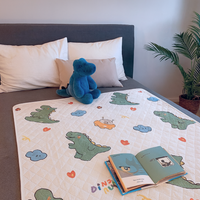
Waterproof Bed Mat
Keeps mattresses dry and stain-free.
Make potty training easier and more confident.


Make potty training easier and more confident.

Most buyers add these items to their order.
Keeps mattresses dry and stain-free.
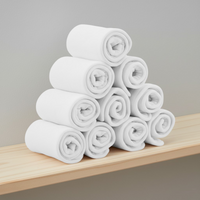
Extra absorbency for overnight and long trips.
It's not stubbornness. It's not readiness. It's what they're wearing.
Every single day, thousands of parents sit a toddler on the potty. The toddler says "I don't need to go." Two minutes later, they're wet. And the parent thinks the same thing:
"Why won't you just use the potty?"
But here's what nobody tells you at the pediatrician's office, in the parenting books, or on the mommy blogs:
Modern disposable diapers and pull-ups are engineered to keep skin completely dry. That's their selling point. They absorb moisture so fast that your child's skin never registers the sensation of being wet.
Which means your toddler isn't ignoring the signal to use the potty.
The signal doesn't exist.
Their brain has spent two, three, sometimes four years in products designed to erase the very sensation they need to learn from. By the time you start potty training, their brain has already learned to filter it out completely.
It's like trying to teach someone not to touch a hot stove — while they're wearing oven mitts. You can explain it. You can use sticker charts and timers and rewards. But until they can actually feel what's happening, no method in the world will work.
In the 1950s, 92% of children were potty trained by 18 months old. Today, the average is past 3 years — with many children still in diapers at 4 and 5.
The only thing that changed was what kids wear.
Our parents used cloth diapers. Cloth gets wet. The child feels it. Their brain connects the dots: "I peed → I feel wet → I don't like this → next time, I'll use the potty."
That feedback loop is instant, natural, and automatic. No sticker charts needed. No timers. No three-day methods. The cloth did the teaching.
Then disposables arrived. Brilliant engineering. Terrible for learning.
Absorb instantly. Skin stays dry. Brain gets no signal. No learning happens. Training takes months or years.
Child feels wetness immediately. Brain connects cause and effect. Learning happens naturally in weeks.
And no — regular underwear isn't the answer either. It lets them feel wetness, but it creates puddles on your floor, your couch, in the car seat. Five accidents a day creates stress for you and shame for them. That stress makes kids shut down, and training gets worse.
You need something in between. Something that lets them feel wetness — but contains the mess. That's what training pants are designed to do.
The concept is simple, but the execution matters. Here's what a properly designed training pant does:
The inner layer stays damp against your toddler's skin for just long enough to send a clear signal to their brain: "Something just happened."
This is the sensation disposables erase. It's the entire foundation of potty training. Without this signal, no method works. With it, most children start making the connection within days.
After the inner layer sends the signal, the middle layer absorbs the moisture — preventing it from leaking through to furniture, car seats, or clothing.
Your child gets the feedback. You don't get the mess.
The outer layer locks everything in. No leaks. No puddles. No soaking through. This is what makes it possible to use them at the park, at daycare, in the car — not just at home on tile floors.
Disposables erase the signal → no learning. Underwear creates the signal but also creates chaos → stress → child shuts down. Training pants create the signal AND contain it → calm learning environment → fast progress.
That's the entire mechanism. It's not complicated. It's just that most parents never hear about it until they've already spent months struggling.
This isn't a trend or a hack. The connection between sensory feedback and potty training has been understood in child development for decades — it's just been buried by the dominance of disposable diapers.
"I work with families every single week with kids 3, 4, even 5 still in diapers. It's incredibly common. And the reason is almost always the same — modern diapers absorb so fast that the child's brain never learns what 'needing to go' feels like."
"The reason so many kids this age are still in diapers has almost nothing to do with the child and nothing to do with the parent. It's what they're wearing."
"What I recommend is training pants that let the child feel wetness but contain it. The ones I've had the best results with are UpAiry. 100% cotton against the skin, not the polyester stuff on Amazon that irritates or leaks. Within a few days, most children start reacting to being wet for the first time. That's the signal finally reaching their brain."
Pull-ups are disposables shaped like underwear. That's it. They use the exact same absorbent technology as diapers. They keep skin dry. They erase the signal.
The packaging says "potty training." The engineering says "diaper." Your child's brain can't tell the difference.
If your child can wear a pull-up all day, have multiple accidents, and never once tell you they're wet — the pull-up is doing exactly what a diaper does. It's keeping them comfortable. And comfort is the enemy of learning.
Your child needs a brief moment of discomfort — just enough to make their brain go "wait, what was that?" — to form the connection. Pull-ups prevent that moment from ever happening.
This is why so many parents spend months in pull-ups thinking they're "potty training" — when their child is actually getting zero sensory feedback the entire time.
Every child is different. But across 92,000+ families, the pattern is remarkably consistent:
Your toddler pees, pauses, looks down. For the first time, they actually feel it. They might look confused. They might say "wet." This is the signal their brain has been missing — and it's the moment everything starts to change.
Accidents become less frequent. They start connecting the sensation with the potty. Many parents report their child telling them about wetness for the first time — something they'd never done in months of prior training.
Asking before going. Staying dry. Going to the potty on their own. The connection is fully formed. Most families are out of diapers for good within this window.
If you don't see progress — real, noticeable progress — within 75 days, you get a full refund. No questions. No hassle. Either they work, or you pay nothing. Over 92,000 families have taken this same step. Most see the first signs within the first week.
More months of accidents, pull-ups, and frustration
More money spent on disposables that erase the signal
More wondering if something is "wrong" with your child
More stress on you, more confusion for them
Most families see the first signs of progress within days
Typical potty training time: 2–3 weeks
Save $100+ per month on disposables
75-day guarantee — works or your money back
Feel & Learn™ Technology · 100% Cotton · No PFAS or Chemicals
"We tried for 8 months with pull-ups. Eight months of accidents, meltdowns, tears — mine and hers. Switched to these and within the first day she stopped, looked down, and said 'wet.' That had never happened before. By day 5, she was telling me before she needed to go. I sat on the bathroom floor and cried."
"Our pediatrician told us to 'wait until he's ready.' We waited an entire year. Nothing changed. The day we put him in training pants, he felt wetness for the first time and was completely shocked. He was trained in under two weeks. He was ready the whole time — he just couldn't feel anything in disposables."
"I spent over $400 on pull-ups over the past year. Four hundred dollars on products that were actively preventing my daughter from learning. These paid for themselves in the first month and she was trained by the end of the second week."
"My sister's daughter trained in a week. Mine took over a year. Same methods. Same age. The only difference was that my sister never used disposables during training — she used training pants from the start. I wish I'd listened from day one."
No. Cloth diapers are designed to absorb and contain — they don't provide sensory feedback. UpAiry training pants have a specific inner layer engineered to stay damp just long enough for your toddler's brain to register the sensation, while the outer layers prevent leaks. The combination of feedback + containment is what makes them effective for training.
Every other method — sticker charts, timers, rewards, the 3-day method — assumes your child can feel when they're wet. If they've been in disposables, they can't. Those methods are asking your child to respond to a signal that their brain can't receive. Training pants remove that barrier. Once the signal exists, the methods you've already tried actually start working.
Parents of 2, 3, 4, even 5-year-olds have seen results. The sensory connection doesn't disappear — it gets buried under years of never being activated. Once you give their brain something to feel again, the awareness starts coming back. Most parents see the first signs within days, regardless of age.
Regular underwear creates feedback — but also creates a disaster. Five puddles a day on your floor, couch, and car seat creates stress for you and shame for your child. Stress makes toddlers shut down, which actually slows training. Training pants give the feedback WITHOUT the mess, so learning stays calm and consistent.
Most parents find that 5 pairs is the minimum for a full day — you'll go through several while training is in the early stages. 10 pairs gives you enough for a full day plus laundry rotation without running out. The most popular option is 5 pairs to start.
Every order is backed by a 75-day money-back guarantee. If you don't see noticeable progress within 75 days, you get a full refund. No fine print. No hassle.
Most families see progress within the first week. Fully trained in 2–3 weeks.
Start Potty Training →


