


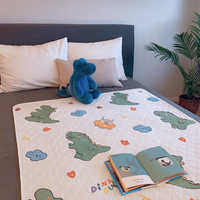
Alfombra Impermeable para Cama
Keeps mattresses dry and stain-free.
Make potty training easier and more confident.

¿Tienes una cuenta?
Inicia sesión para finalizar tus compras con mayor rapidez.
Most buyers add these items to their order.
Keeps mattresses dry and stain-free.
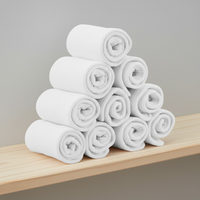
Extra absorbency for overnight and long trips.

Why picky eating and poop problems so often feed each other, and how dietitian Sarah Lensze helps families break the loop without a fight at dinner.

With Sarah Lensze, Dietitian Updated Nov 2026

Leo was four, and he ate seven foods.
White toast with butter, cut into squares, never triangles. Plain pasta, no sauce. Chicken nuggets, one brand only. Crackers from the yellow box. Apple slices, peeled. Milk. Dry cereal, eaten out of his hand.
Anything else on the plate and the plate got pushed away. If something new touched his pasta, the pasta was ruined too.
His mum, Amy, had stopped counting how many dinners ended in tears. Hers as often as his.
But it wasn’t dinner that finally sent her looking for help. It was the bathroom.
Leo went every four or five days. When he did, it was hard, it hurt, and he screamed. In between, he’d stand stiff-legged in the corner of the living room, holding it in, insisting he didn’t need to go.
If your child eats the same handful of foods, goes days between poops, and refuses anything the second they work out it’s meant to help, Leo’s story will probably sound familiar.
Their pediatrician gave the advice almost every parent hears: more fiber, more fruit, more water, and Miralax to keep things moving in the meantime.
Amy tried all of it.
Hiding the pear cost them one of his seven foods. Now there were six.
“Every single thing I tried seemed to make it worse. He went from seven foods to six, and he still couldn’t poop.”
Amy, Leo’s mum

Sarah Lensze is a dietitian who works with families on exactly this kind of problem. When Amy walked her through everything she’d tried, Sarah noticed something straight away.
“Every single fix ran through Leo’s mouth. More fiber, more fruit, the prune juice, the gummies, the hidden pear. They all depended on a four-year-old agreeing to eat something he’d already decided not to.”
Sarah Lensze, Dietitian
It’s the part most parents of picky eaters are never told. The standard advice for constipation is a list of foods. For a picky eater, it’s a list of foods they won’t eat.
Sarah’s first job was showing Amy that Leo’s picky eating and his poop problems weren’t two separate things. Researchers have been measuring the link for years.
A study that followed 4,823 children in the Netherlands from before they were born found that kids who were constipated at age 2 or 3 were more likely to be fussy eaters by age 4. And fussier eaters at 4 were more likely to be constipated at 4 and at 6. The researchers’ conclusion: a vicious cycle might develop.1
A UK study of 3-year-olds found picky eaters were more likely to usually have hard stools, and traced it to eating less fiber, especially from vegetables.2
At one pediatric clinic for constipation, 27% of parents described their child as a picky eater, compared with 13% of parents in a comparison group.3
“It isn’t only that picky eaters get less fiber. It works both ways. A child who’s backed up often doesn’t feel like eating much, and what they do eat tends to be the same few safe foods.”
Sarah Lensze, Dietitian
That lines up with NHS guidance, which lists a poor appetite, or tummy pain that improves after a poo, as a sign of constipation in children.4
This was the part that changed how Amy saw her son.
“Leo wasn’t being stubborn. He’d learned that pooping hurts. So anything connected to pooping, the juice, the gummies, the food his mum kept pushing, became something to avoid. For a four-year-old, that’s a completely reasonable response.”
Sarah Lensze, Dietitian
Researchers at Lurie Children’s Hospital in Chicago found something similar: preschoolers with chronic constipation were often more sensitive to food textures, tastes and smells, and that sensitivity was the strongest predictor of holding in poop or avoiding the bathroom.5
 BEFOREAFTER
Sarah drew Amy the loop Leo was stuck in:
And round it goes.
Amy had spent months thinking she’d caused this, with the wrong foods, or by not catching it sooner. She hadn’t. It isn’t your parenting either, and it isn’t your kid being difficult.
Sarah’s approach flips the usual order. Instead of fighting over the plate to fix the poop, take the pressure off the plate and support the gut directly, so pooping stops hurting. Once the bathroom isn’t a battle, there’s room to work on food slowly.
So when a family like Amy’s asks what to try, Sarah looks for something that ticks five boxes:
Kiwi is one of the fruits that’s been studied for this. In adults, eating green kiwi every day did almost twice as much as a fiber supplement to get things going.* But good luck getting a picky eater to eat a kiwi every day. Leo wouldn’t have touched one.

“That’s why I’m comfortable pointing families to UpAiry Tummy Gummies. It’s one kiwi gummy a day, it doesn’t depend on what they’ll eat at dinner, and the ingredients make sense for this problem.”
Sarah Lensze, Dietitian
Every gummy has three gut ingredients:
The kiwifruit pulls water back into the gut, so hard, dry poop softens up. B. coagulans, a probiotic that’s been studied in kids aged 4 to 12,* helps put back the good bacteria the gut’s been missing and keeps things regular. L. paracasei adds extra gut support.
Made without gluten, dairy, soy, eggs, tree nuts, peanuts, wheat, artificial colors & flavors, high-fructose corn syrup, GMOs or preservatives. May contain traces of milk. Contains kiwifruit.
Buy 2, Get 1 Free · Free shipping
After the poop gummies, Amy knew better than to explain. One gummy went on the breakfast table next to Leo’s toast, every morning, same time. When he asked, it was just his morning gummy. The bottle lived on the top shelf.
Most kids love the sweet kiwi flavor. They’re soft, easy to chew, and don’t have the chalky texture of some supplements.

Sarah’s tipGive it at a time your child already knows, like after breakfast or before brushing their teeth. Skip the speech about what it’s for. And keep the bottle up high, like any supplement.
Nothing dramatic happened in the first week. Amy nearly gave up.
Then, partway through the second week, Leo went without screaming. It wasn’t a big moment. It was just a normal poop. He came out of the bathroom and asked for toast.
By week four, he was going every day or two. By week six, Amy realised she’d stopped counting the days.
He still eats a short list of foods, and Sarah is clear about that: the gummy isn’t a picky eating cure. But with the bathroom no longer a battle, they’ve started putting one new food on the side of his plate each week, with no pressure to eat it. Last month, he tried a strawberry.
“I didn’t need him to eat broccoli. I needed him to stop screaming on the toilet. Everything else, we can work on.”
Amy, Leo’s mum
Every child is different, and Leo’s timeline won’t be everyone’s. Here’s what most families can expect:
The rock-hard poops start to soften. Some kids take a little longer, and that’s normal.
Poops get easier to pass, with less straining. When it stops hurting, there’s less reason to hold it in.
A steady rhythm. Regular, comfortable poops, without a fight over what’s on the plate.
The new normal. One gummy with breakfast, and dinner that’s about dinner again, not poop.
When to talk to your pediatrician firstIf your child eats only a handful of foods and is losing weight, if there’s blood in their poop, or if you’re worried about how they’re growing, Sarah’s advice is to talk to your pediatrician before trying anything new.
You can keep doing what you’re doing. The hidden purees, the bargaining, the Miralax on bad days, and hoping next month is different.
Or you can do what Amy did: take the gut side off the dinner table for a few months, and see what changes.
For best results, give 1 gummy every day for at least 3 months, which is exactly what Buy 2, Get 1 Free covers. And you’re covered by a 75-day money-back guarantee.
The worst case is you get your money back. The best case is a kid who stops dreading the bathroom, and a dinner table that’s about dinner again.
Buy 2, Get 1 Free · 75-day money-back guarantee
“He passed some really dry, painful stools which led to him withholding out of fear. We tried him on these and in a couple weeks he slowly stopped holding it in. No more bathroom dramas.”
Jenna P.“For 8 months my son was going days without pooping. Miralax helped on the bad days but I didn’t want to keep forcing him to go every time. I started giving him these gummies and now he’s going way more consistently.”
Kimberly C.“We tried everything before this, and nothing stuck. We wanted to move away from laxatives and find a long term solution. These delivered.”
Christopher F., dad of a 5 year old“Poop struggles have been a never-ending nightmare in our house for over a year. In just a few weeks, our daughter has made real progress and is now pooping much more frequently 💚”
Tara K., mom of a 4 year old“Finally found something that actually helped us! After a year of withholding our 4-year old now goes regularly!”
Jally T., parent of a 4 year old
Over 100,000 Parents Use Them
$119.97 $59 for 3 months · just 66¢ a day
75-day money-back guarantee · Free shipping

